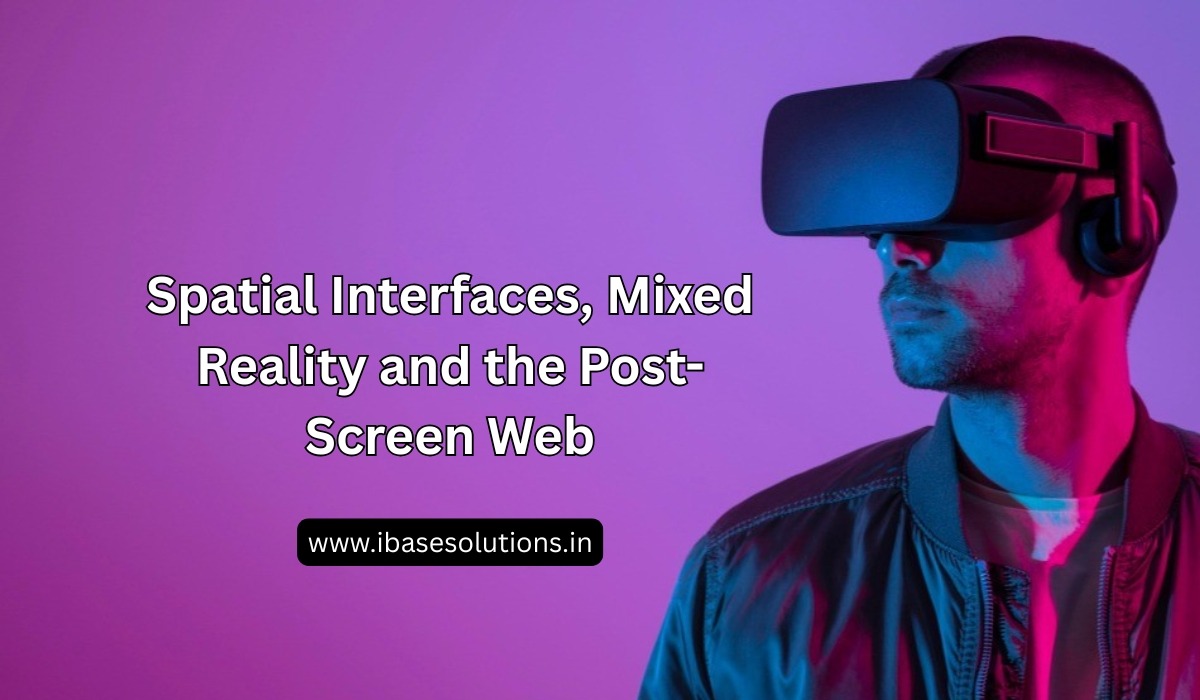
Spatial Interfaces, Mixed Reality and the Post-Screen Web

As extended-reality (XR) hardware becomes more capable, web and interface design are gradually expanding into spatial environments. Industry discussions of UI/UX trends for 2025 highlight spatial interfaces, ambient computing and multi-device experiences as emerging themes, where digital content is layered onto physical spaces rather than confined to a rectangular display.

For web technology, this shift is supported by APIs such as WebXR and by performance improvements from WebAssembly and WebGPU, which can render complex 3D scenes and handle real-time interaction in the browser.

Designing for this future means thinking beyond pages and screens. Spatial interfaces must manage depth, ergonomics and attention: where a panel appears in the room, how far the user has to move their hands, and how information follows them across devices. Accessibility and comfort—such as motion-sickness reduction and clear focus cues—will be as important as aesthetics. Although mass adoption will take time, experimenting now with lightweight 3D patterns and device-agnostic layouts can prepare teams for a more immersive, post-screen web.


AI-Assisted Product Design: UX Tools That Co-Create With Designers

AI is rapidly moving from a separate research topic into the everyday toolkit of UX and product designers. New platforms can generate user flows, screen layouts and even on-brand UI components from prompts, documents or sketches, integrating directly with tools like Figma and code editors. Recent interviews with founders of AI-first design platforms emphasise that the goal is to enhance creativity and speed, not to remove the designer from the process.

In practice, AI can propose alternative layouts, highlight accessibility issues, create variant designs for A/B tests or summarise research notes into design requirements. Designers then curate, adjust and refine these suggestions to fit user needs and brand guidelines.

Looking ahead, a major UX challenge will be maintaining human perspective and ethical judgement. While AI can quickly explore design space, it does not automatically understand cultural context, inclusion or long-term impact. Teams that treat AI as a collaborative assistant—rather than a replacement—are likely to see the biggest gains in productivity while still delivering thoughtful, human-centred experiences.

CSS Container Queries and Design Tokens: Truly Responsive, System-Level Design

Traditional responsive design relied heavily on viewport-based media queries. As component libraries and complex layouts became the norm, this approach started to show limits. Container queries solve that problem by letting components style themselves based on the size of their parent container instead of the entire screen. Documentation and compatibility tables show that size-based container queries now have broad support across modern browsers.

Combined with design tokens—centralised variables for things like colour, spacing and typography—teams can create UI systems that are both flexible and consistent. Components can adapt when placed in different contexts (sidebars, cards, full-width sections) while still reflecting a single design language.

For UX and UI practitioners, this unlocks more modular and reusable design patterns. Instead of designing dozens of breakpoints, teams can focus on robust components that gracefully respond to their surroundings. The trade-off is a need for better collaboration between designers and developers, clear naming conventions and stronger documentation, as systems become more powerful but also more complex.

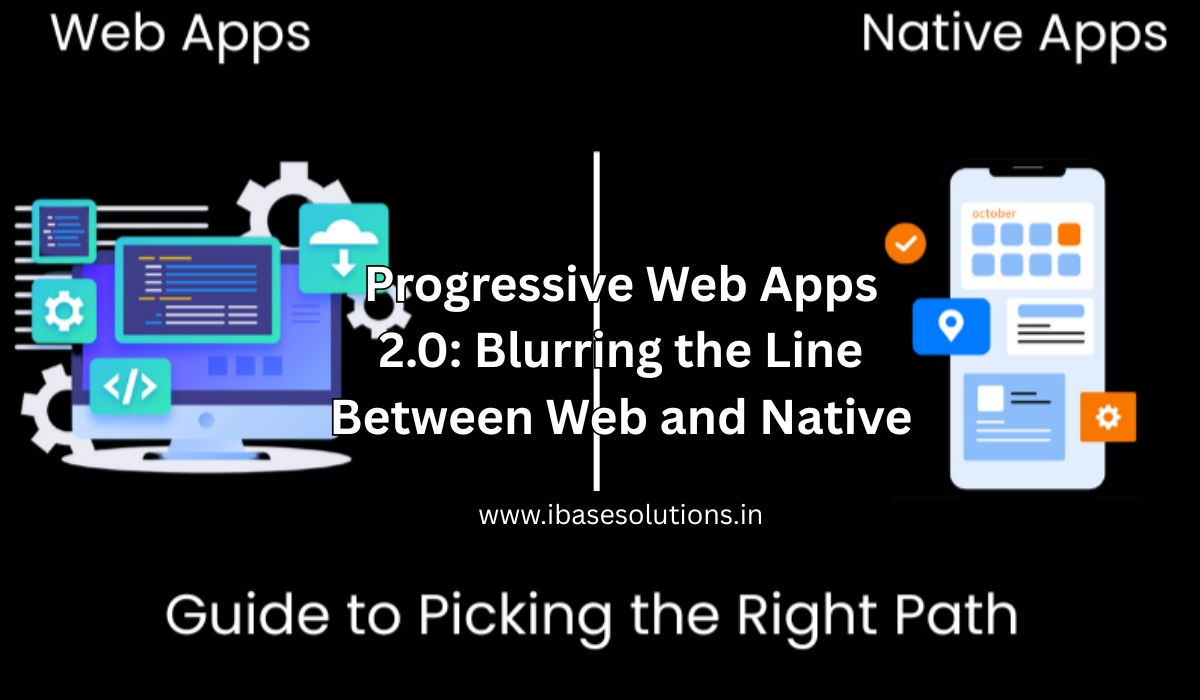
Progressive Web Apps 2.0: Blurring the Line Between Web and Native

Progressive Web Apps (PWAs) are no longer just a performance tweak; they are evolving into a full application strategy for many organisations. PWAs blend the reach of websites with native-like behaviours such as offline support, push notifications and installable icons, and recent industry analyses highlight them as one of the dominant web development trends through 2025.

The next generation of PWAs is building on newer browser capabilities: improved background sync, richer file-system access, payment APIs and tighter integration with platform app stores. Together, these features can turn a high-traffic website into a cross-platform product that behaves like a native app on mobile and desktop, without separate codebases.

For UI and UX teams, PWAs raise design questions around consistency across devices, offline state handling and user trust when a website asks to be “installed”. Clear messaging, transparent permissions and thoughtful offline UX patterns—like graceful fallbacks and sync indicators—will be essential. As more businesses adopt PWA-first strategies, users may increasingly treat the browser as an app hub rather than just a way to visit pages.

WebGPU and In-Browser AI: Turning the Browser Into a High-Performance Runtime

A key technology shaping the future of the web is WebGPU, a modern graphics and compute API that lets browsers talk more directly to the device’s GPU. It is designed as the successor to WebGL and is now available in major browsers, enabling high-performance rendering and general-purpose GPU computations directly in JavaScript and other languages.

For developers, WebGPU opens the door to advanced 3D interfaces, complex data visualisations and even on-device AI inference. Recent guidance for 2025 shows that frameworks can use WebGPU to run sizeable machine-learning models in-browser, improving speed and privacy by keeping data on the device.

From a UX perspective, this means richer experiences like real-time product configurators, immersive dashboards and interactive simulations without relying entirely on backend infrastructure. The main challenges will be managing energy use on mobile devices, handling fallback paths for older browsers and ensuring accessible experiences rather than purely “flashy” visuals. As support matures, WebGPU is expected to become a standard tool in performance-sensitive web applications, especially those that combine AI features with sophisticated visuals.