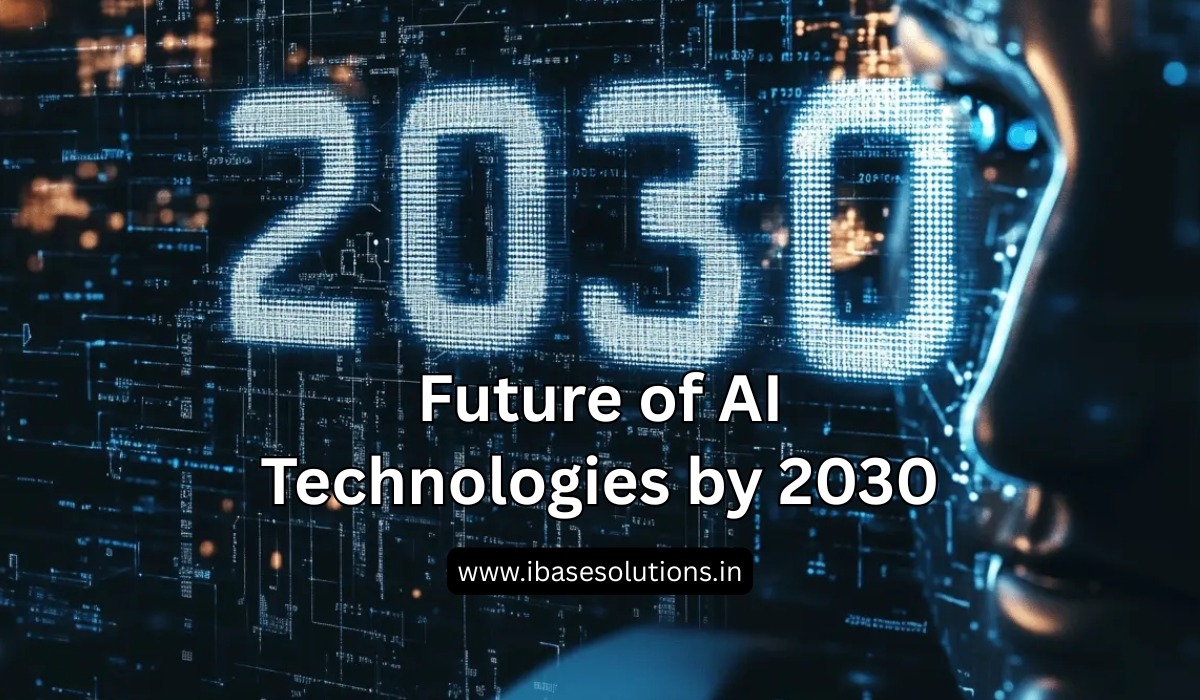
Artificial Intelligence is expected to reach unprecedented levels of capability by 2030, influencing how people live, work, learn, and interact with technology. The next decade will not only bring improvements in existing AI models but also introduce entirely new forms of autonomous intelligence.
1. Advanced Generative Intelligence
By 2030, generative AI will evolve from content creation to multi-agent reasoning, allowing systems to solve complex real-world problems, simulate scenarios, and co-design products with humans. AI will transition into creative and analytical partner roles across industries.
2. Autonomous AI Systems
Industries like manufacturing, logistics, healthcare, and energy will adopt self-managing AI systems capable of monitoring, learning, and optimizing operations without human intervention. These systems will reduce errors, increase productivity, and enhance safety.
3. AI + Quantum Computing
Quantum-enhanced AI will introduce new capabilities in drug discovery, cybersecurity, climate modelling, and encryption-breaking simulations. While mainstream quantum computing may still be emerging, its early integration with AI will reshape scientific innovation.
4. Emotionally Aware AI
Emotion recognition will become more accurate, enabling AI to interpret tone, sentiment, and facial expression. This will enhance digital assistants, customer service bots, and mental-health applications, while raising important privacy and ethics considerations.
5. Hyper-Personalized Experiences
AI will deliver extremely tailored experiences across entertainment, shopping, education, and healthcare. Users will interact with AI that understands their preferences, learning style, goals, and behaviour in real time.
6. Regulatory and Ethical Evolution
Governments worldwide will implement structured AI governance, transparency standards, and ethical frameworks to ensure safe and responsible use.
By 2030, AI will be deeply integrated into daily life, accelerating innovation while transforming industries at scale.