
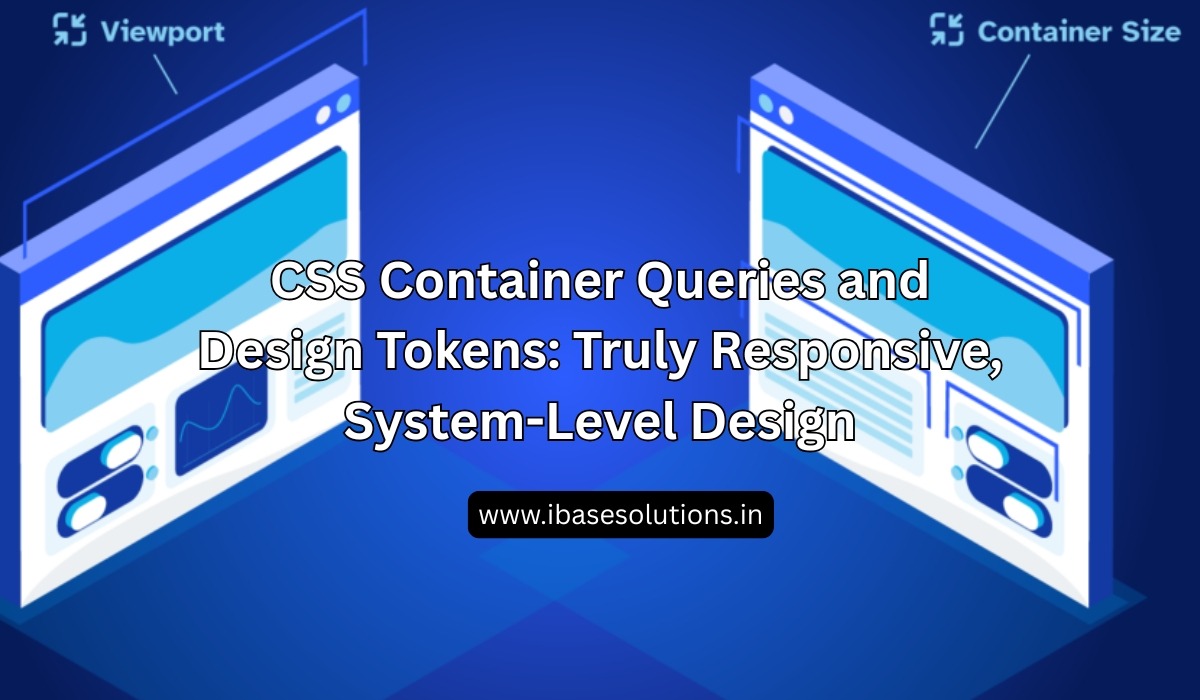
Traditional responsive design relied heavily on viewport-based media queries. As component libraries and complex layouts became the norm, this approach started to show limits. Container queries solve that problem by letting components style themselves based on the size of their parent container instead of the entire screen. Documentation and compatibility tables show that size-based container queries now have broad support across modern browsers.
Combined with design tokens—centralised variables for things like colour, spacing and typography—teams can create UI systems that are both flexible and consistent. Components can adapt when placed in different contexts (sidebars, cards, full-width sections) while still reflecting a single design language.
For UX and UI practitioners, this unlocks more modular and reusable design patterns. Instead of designing dozens of breakpoints, teams can focus on robust components that gracefully respond to their surroundings. The trade-off is a need for better collaboration between designers and developers, clear naming conventions and stronger documentation, as systems become more powerful but also more complex.